Electric scooters: can you ride yours where you live?
An electric scooter looks the same whatever it can do, but the law draws a sharp line between one that does 20 km/h and one that does 25. Speed and motor power decide whether you may ride it on the road, and the limits are not the same in Sweden, Norway, Denmark and Finland.
Here we go through the rules country by country, and what they mean for two of the electric scooters we sell: the Segway Ninebot F2 Pro II E and the Segway Ninebot Max G3 D. In short for Sweden: neither is classed as a bicycle there, so neither may be ridden on public roads, streets or cycle paths.
This guide covers the four Nordic countries. The rules differ between EU countries too, and each product page shows what applies in the country you are visiting from.
Products in this guide
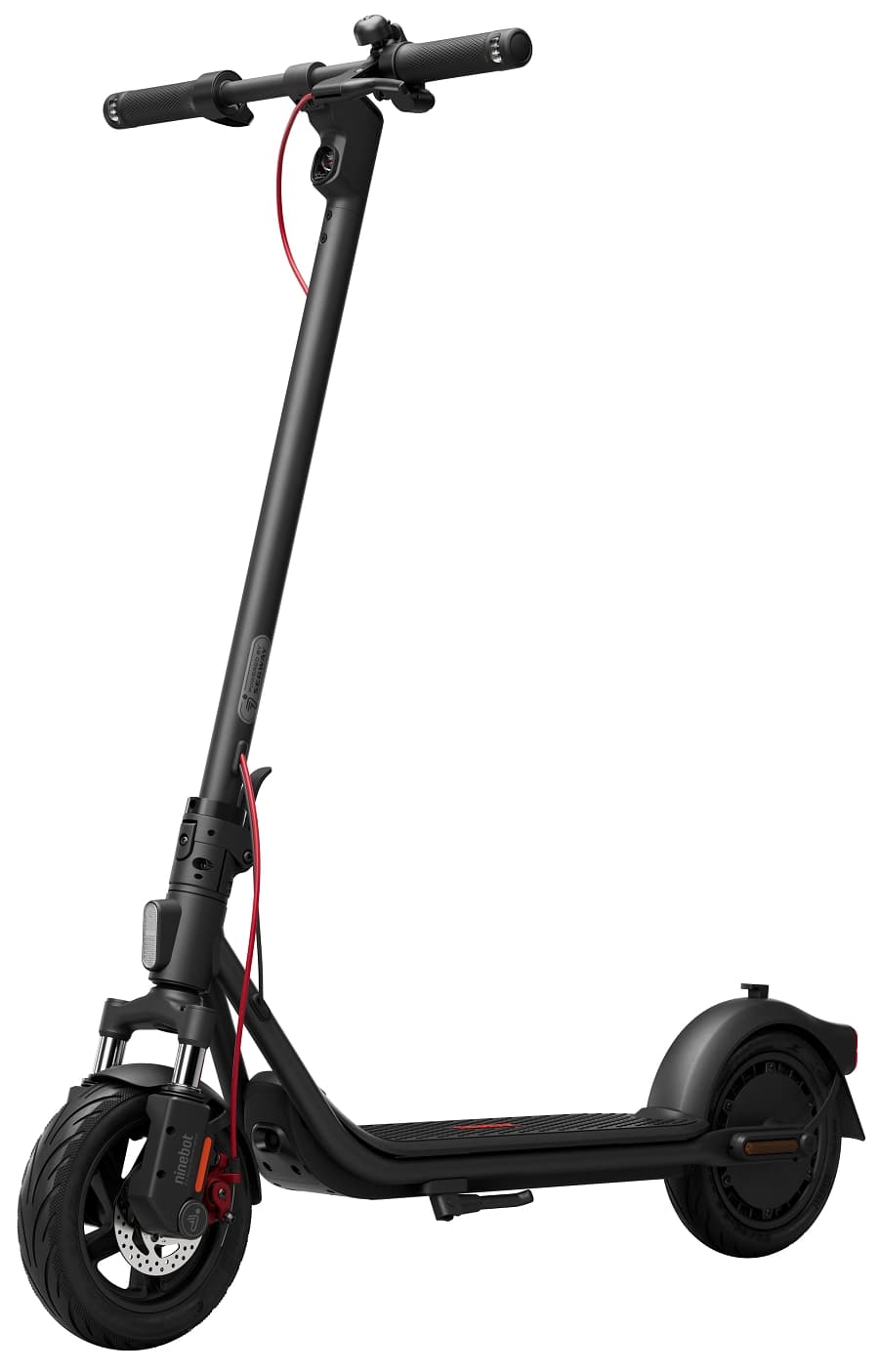
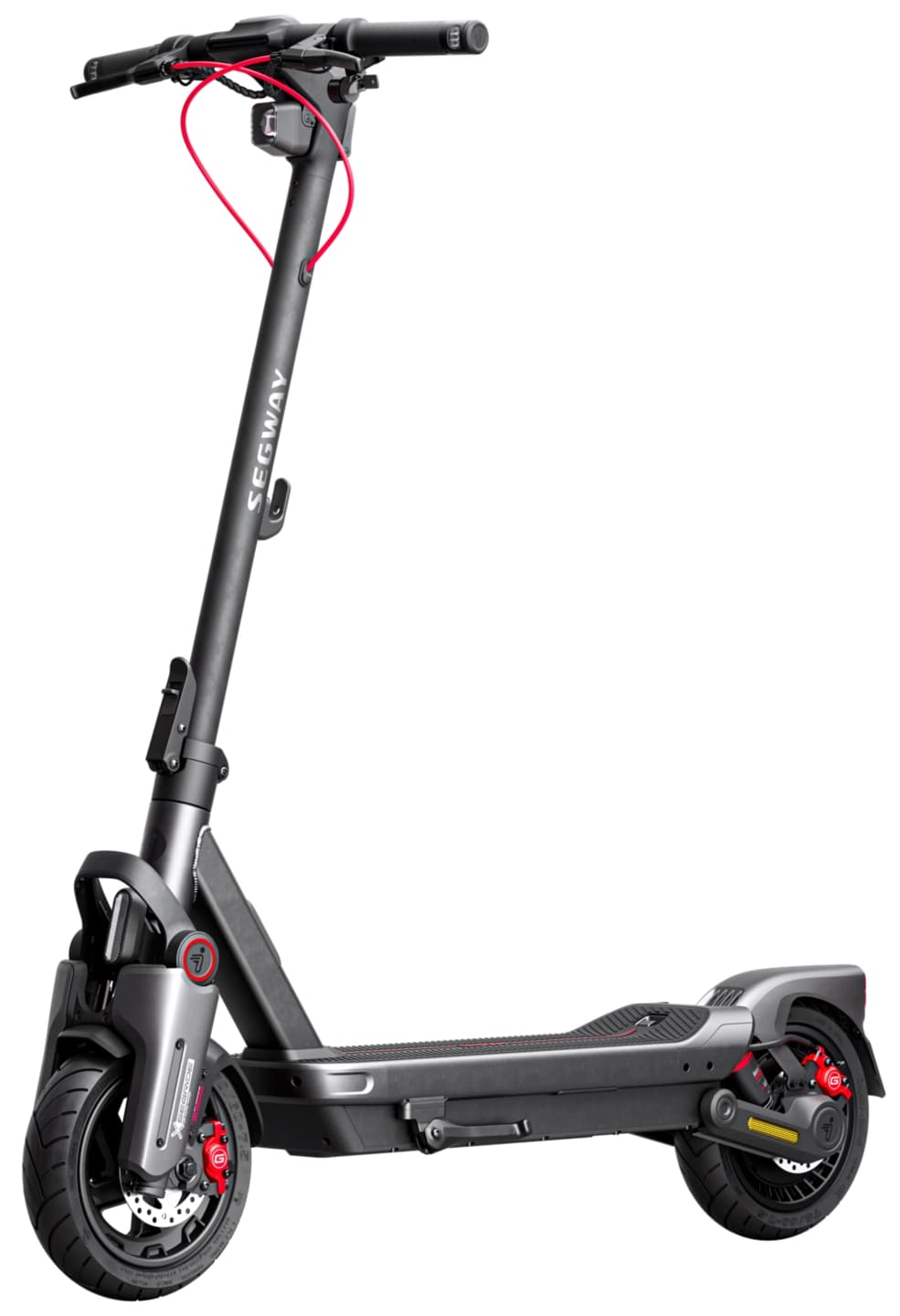
Two electric scooters for long commutes
The Segway Ninebot F2 Pro II E is the lighter of the two: 17.8 kg, 10-inch self-sealing tyres, front suspension and a 460 Wh battery that gives up to 65 km in Eco mode. The motor has 450 W nominal power (900 W peak) and the top speed is 25 km/h.
The Segway Ninebot Max G3 D is built for longer distances: a 597 Wh battery and up to 80 km of range at 15 km/h, hydraulic suspension front and rear, 11-inch tyres and disc brakes on both wheels. The top speed is 20 km/h and the motor has 500 W nominal power (2,000 W peak). It charges in about 3.5 hours with the built-in charger.
| F2 Pro II E | Max G3 D | |
|---|---|---|
| Top speed | 25 km/h | 20 km/h |
| Nominal power | 450 W | 500 W |
| Battery | 460 Wh | 597 Wh |
| Range (max) | 65 km | 80 km |
| Tyres | 10-inch, self-sealing | 11-inch, self-sealing |
| Suspension | Front | Hydraulic, front and rear |
| Length | 114 cm | 119 cm |
| Max load | 120 kg | 130 kg |
Why speed matters
It is easy to think that a few km/h either way makes no difference. But the energy in a crash grows with the square of the speed: at 25 km/h it is more than 50 per cent greater than at 20 km/h. That is why Sweden, Norway and Denmark draw the line at 20 km/h for what may be ridden among cyclists and pedestrians, and why an electric scooter that goes faster falls into a different vehicle class there.
The same applies if you modify a scooter to go faster than it is built for. You then have a different vehicle, with different requirements, and in Sweden it can lead to a report for driving without a licence.
Sweden: 20 km/h and 250 W
In Sweden an electric scooter counts as a bicycle only if it is built for no more than 20 km/h and has a motor of no more than 250 W continuous power. Both conditions must be met, according to the Swedish Transport Agency (Transportstyrelsen). It may then be ridden where you may cycle:
- On the cycle path first, otherwise on the road. Not on the pavement. Only children up to and including the year they turn eight may ride on the pavement when there is no cycle path.
- A helmet is compulsory if you are under 15 and recommended for everyone.
- It must have brakes and a bell, plus lights and reflectors when it is dark.
- Do not park on the pavement or cycle path where there is no cycle parking.
If the scooter is faster or more powerful than that, it is no longer a bicycle. Up to 25 km/h and 1 kW it falls under the Swedish rules for a class II moped, which require type approval or approval at inspection, motor insurance, a helmet, a minimum age of 15 and a rider certificate. Transportstyrelsen says that getting a scooter without a seat approved this way is very difficult in practice. According to the Swedish Police, riding one on the street can mean a fine for using an unregistered vehicle, and if you have no licence you will be reported for driving without one. A parent who lets their child ride can be prosecuted themselves.
What does that mean for our two?
- The F2 Pro II E does 25 km/h and has 450 W: over both limits.
- The Max G3 D does 20 km/h, but the motor has 500 W nominal power: over the power limit.
So neither may be ridden in traffic in Sweden. They may only be used inside a fenced area, and Swedish courts have not accepted, for example, a house plot or a campsite as one.
Norway: 20 km/h, insurance and helmets for the young
In Norway, according to the Norwegian Public Roads Administration (Statens vegvesen) and the road safety organisation Trygg Trafikk:
- No more than 20 km/h, locked so that the top speed cannot be changed with a switch, a riding mode or an app.
- Walking pace (no more than 6 km/h) when you pass pedestrians.
- A minimum age of 12, and a helmet is compulsory if you are under 15.
- Liability insurance is compulsory, for privately owned scooters too.
- The blood alcohol limit is 0.2 per mille, the same as for cars.
- Only one person on the scooter.
The Norwegian technical requirements also limit the scooter to 120 cm in length. Segway's Nordic distributor states the same limit for the Max G3 D.
The Max G3 D is 119 cm long as delivered and does 20 km/h. The extra mudguard that comes with it makes it longer than 120 cm, so leave it off if you want to stay within the Norwegian length limit. The F2 Pro II E does 25 km/h, which is over the Norwegian limit.
Denmark: helmets for all and 25 kg
Denmark runs a trial scheme for motorised scooters. The requirements, as the Danish Road Traffic Authority (Færdselsstyrelsen) describes them:
- The scooter may be built for no more than 20 km/h. Choosing a slower riding mode is not enough if it can be switched to go faster.
- It may weigh no more than 25 kg.
- A helmet is compulsory for everyone, whatever their age.
- You must be 15 or over to ride on your own.
- You must use the cycle path if there is one, and never the pavement.
- White or yellow front light, red rear light and reflectors.
- Insurance is required only for rented scooters, not privately owned ones.
The F2 Pro II E does 25 km/h and so falls outside the Danish rules. The Max G3 D is built for 20 km/h, but it is close to the weight limit: check its weight against 25 kg before you ride it in Denmark.
Finland: 25 km/h and 1 kW
Finland has the most generous limit. An electric scooter counts as a light electric vehicle (kevyt sähköajoneuvo) if it is built for no more than 25 km/h and has no more than 1 kW of power. Since 2025 the following also applies, according to the Finnish Road Safety Council (Liikenneturva):
- A minimum age of 15, and anyone who lends a scooter to someone younger can be fined.
- A blood alcohol limit of 0.5 per mille.
- A slower riding mode does not change the classification. What counts is how the scooter is built at the factory.
Motor insurance is compulsory in Finland if the scooter weighs more than 25 kg or is built for more than 25 km/h.
Both the F2 Pro II E (25 km/h, 450 W) and the Max G3 D (20 km/h, 500 W) are within the Finnish limits for light electric vehicles.
Summary
| Sweden | Norway | Denmark | Finland | |
|---|---|---|---|---|
| Highest design speed | 20 km/h | 20 km/h | 20 km/h | 25 km/h |
| Power limit | 250 W | None | None | 1 kW |
| Minimum age | None | 12 | 15 | 15 |
| Helmet | Under 15 | Under 15 | Everyone | Normally to be worn, no penalty |
| Insurance (privately owned) | Over 25 kg or over 20 km/h | Compulsory | No | Over 25 kg or over 25 km/h |
| F2 Pro II E in traffic | No | No (25 km/h) | No (25 km/h) | Yes |
| Max G3 D in traffic | No (500 W) | Yes, with insurance | Yes, if within the weight limit | Yes |
Rules change. In Norway, a proposal to raise the minimum age from 12 to 16 and to drop the helmet requirement for under-15s is out for consultation until 5 February 2027, and nothing has been adopted. In Sweden, Transportstyrelsen is reviewing the rules, with a report expected in early 2027. Always check what applies with the authority in your country before you ride, and never ride faster than the scooter is built for.
Frequently asked questions
Can I buy an electric scooter that is not classed as a bicycle in Sweden? Yes. It is riding it in traffic that is not allowed. It may only be used inside a fenced area, and an ordinary house plot has not been accepted as one.
Does it become legal if I turn the speed down in the app? Not in Sweden, Norway or Denmark. What counts is what the scooter is built for, not the riding mode you have chosen, and in Norway the top speed must be locked so that it cannot be changed with a switch, a riding mode or an app. Sweden also requires a motor of no more than 250 W continuous power, and a riding mode does not change that.
Do I need insurance? In Norway, liability insurance is compulsory for every electric scooter. In Denmark, insurance is required only for rented scooters. In Sweden, a scooter that counts as a bicycle and weighs no more than 25 kg needs no insurance, but a heavier one, or one built for more than 20 km/h, needs motor insurance. In Finland, motor insurance is compulsory if the scooter weighs more than 25 kg or is built for more than 25 km/h.
Updated 20 November 2026 · Linné Elektronik
Join the Customer Club and we will email you when there are new videos and guides, along with our offers.