Quest 3S, Quest 3 or Pico 4 Ultra? Best VR headset 2026
VR has become both cheaper and simpler. You don't need a computer or sensors on the wall, the headset manages on its own. The question we get most often is which one is best, and the answer depends more on budget and what you want to play than on the specifications.
Here we compare the three headsets most people choose between: Meta Quest 3S, Meta Quest 3 and Pico 4 Ultra. At the end we tell you about a headset for PC gamers that we can't wait to test.
Buy now
The short answer
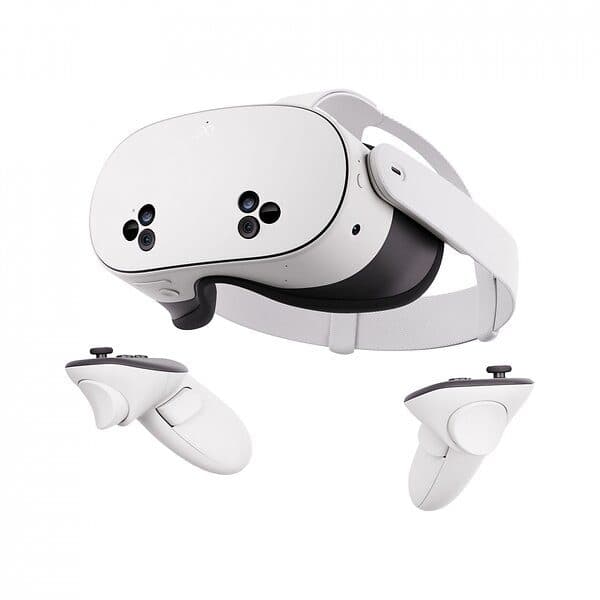
- Best for most people: Meta Quest 3S. The largest game library, the longest battery life of the three and the lowest price. It's the one we recommend first.
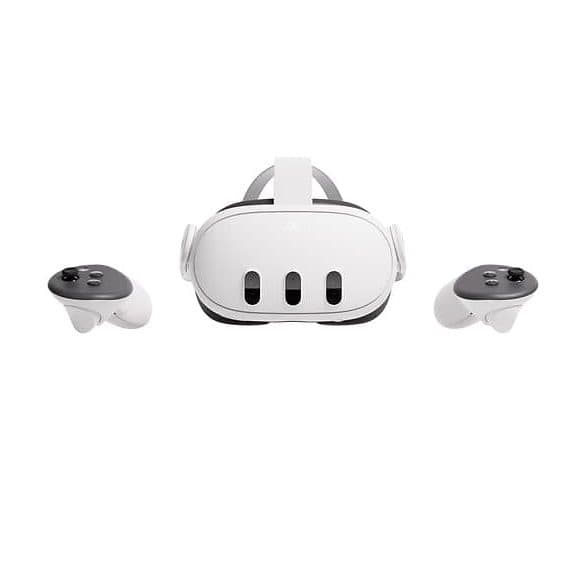
- Sharpest picture for the money: Meta Quest 3. Same processor as the 3S but better lenses and a wider field of view. Choose it if you know you'll play a lot.
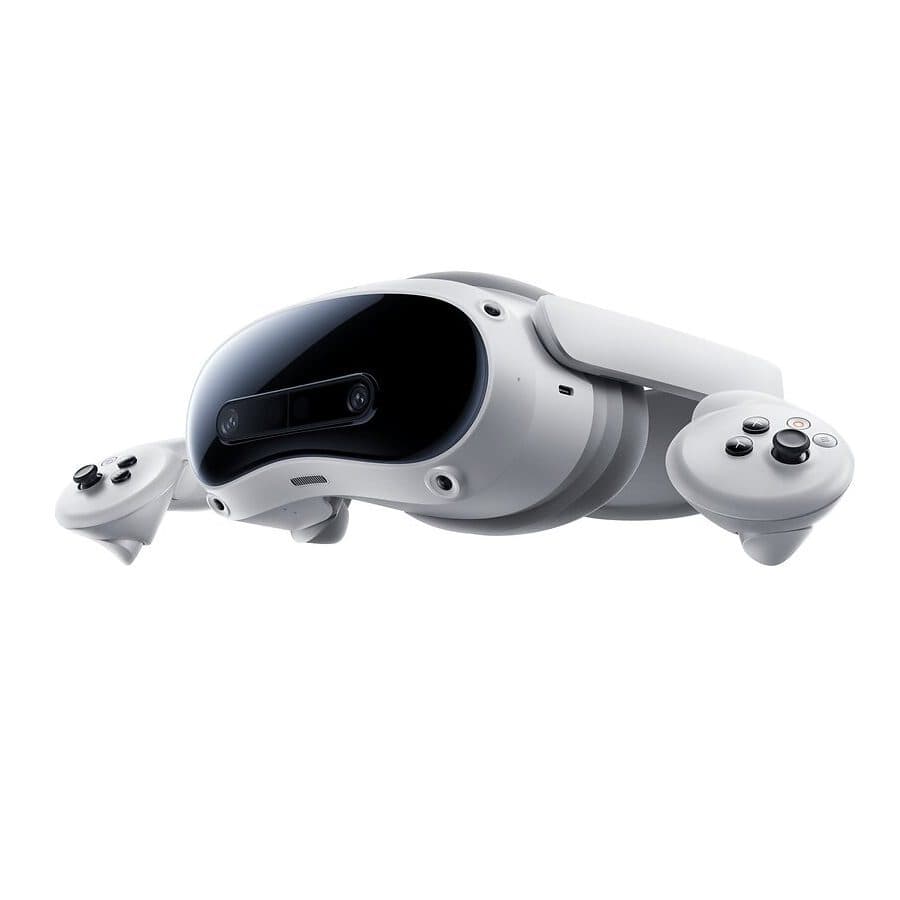
- For those who want to stay outside Meta's world: Pico 4 Ultra. The most pixels, the most memory, strong mixed reality cameras and Wi-Fi 7. A smaller game library.
All three side by side
| Meta Quest 3S | Meta Quest 3 | Pico 4 Ultra | |
|---|---|---|---|
| Processor | Snapdragon XR2 Gen 2 | Snapdragon XR2 Gen 2 | Snapdragon XR2 Gen 2 |
| RAM | 8 GB | 8 GB | 12 GB |
| Storage | 128 or 256 GB | 512 GB | 256 GB |
| Lenses | Fresnel | Pancake | Pancake |
| Resolution per eye | 1832 × 1920 | 2064 × 2208 | 2160 × 2160 |
| Sharpness (pixels per degree) | 20 | 25 | 20.6 average, 22.5 centre |
| Horizontal field of view | 96° | 110° | 105° |
| Refresh rate | 72, 90 and 120 Hz | 72, 90 and 120 Hz | 90 Hz |
| Eye distance | three fixed positions | continuous | continuous, 58 to 72 mm |
| Mixed reality cameras | colour, 4 MP | colour, 4 MP | two 32 MP colour cameras and a depth camera |
| Battery life according to the maker | 2.5 hours | 2.2 hours | not stated |
| Wi-Fi | Wi-Fi 6E | Wi-Fi 6E | Wi-Fi 7 |
The figures come from Meta's and Pico's own specification pages (checked 15 November 2026).
What most people miss: Quest 3 and 3S share the same brain
Put Quest 3 and Quest 3S side by side in the table and look at the rows for processor, RAM and cameras. They are identical. The games are the same, and they run just as fast on both.
What you pay extra for in Quest 3 is the lenses. Pancake lenses are sharp all the way to the edges, while the Fresnel lenses in the 3S are sharpest in the centre and softer further out. Quest 3 also has a 14 degree wider field of view, and the eye distance adjusts continuously instead of in three steps.
And one thing goes the other way: Quest 3S has longer battery life, 2.5 hours against 2.2 according to Meta. The cheaper headset actually lasts longer per charge.
So the question isn't which one is more powerful. The question is how much you want to pay for a sharper picture at the edges.
The most pixels is not the same as the sharpest picture
Pico 4 Ultra has the most pixels of the three. Even so, Meta states a higher sharpness for Quest 3 than Pico states for its own headset. The explanation is that the pixels are spread over fields of view of different sizes.
The measure that says the most is pixels per degree, meaning how many pixels fit into each degree of what you see. An eye with normal vision sees about 60 pixels per degree. This is how far the headsets get, according to the makers' own figures:
| Headset | Pixels per degree | Roughly share of normal vision |
|---|---|---|
| Meta Quest 3S | 20 | one third |
| Pico 4 Ultra | 20.6 average, 22.5 centre | just over one third |
| Meta Quest 3 | 25 | two fifths |
| Pimax Crystal Pro | 35 | more than half |
The makers don't measure in exactly the same way, so read the figures as a direction rather than an exact ranking. But the difference shows in practice: menu text and numbers in games are clearly easier to read in Quest 3 than in 3S.
Meta Quest 3S: what we recommend to most people
Quest is the easy way in. You don't have to invest your whole life in a piece of tech to get started: put on the headset, download an app and go. The apps are simpler than on a computer, which is an advantage when several people in the family are going to use it.
We often think of it as a games console for the whole household rather than a single piece of tech. You can bring it to friends' houses, and you can even play out in the garden if you like.
If you're a bit more into it, it can also be connected to a computer, opening up a whole different library of heavier games.
The game library is still limited compared with a games console. That should be said plainly. But the experience itself is fantastic in a way that's hard to explain until you've tried it, and the best games are genuinely good.
Beat Saber is still the game that makes people understand what VR is about. FitXR, previously called BoxVR, is a boxing workout that genuinely tires you out.
At Linné, Quest 3S 256 GB currently costs 511 €.
Products in this guide
128 or 256 GB?
Games are large, often 10 to 20 GB. Unlike a phone, you're not storing photos or videos here, just apps.
128 GB is enough for most people. If you keep a couple of favourites at a time, that's no problem, and uninstalling something doesn't mean losing your purchase.
Go for the larger storage if you know you'll want many games installed at once and don't want to manage space.
Meta Quest 3: same games, sharper picture
Quest 3 is the headset for you if you already know VR is your thing. You get the same games and the same performance as in the 3S, but the picture is sharper, the field of view wider and the lenses easier to get in focus. It shows most in games with a lot of text and in long sessions, where the sharp picture out to the edges means your eyes don't have to work as hard.
With 512 GB you never have to think about which games will fit.
At Linné, Quest 3 currently costs 695 €.
Products in this guide
Pico 4 Ultra: for those who want more hardware
Pico 4 Ultra is for anyone who wants a real Pro system. It has the most memory of the three, the most pixels, Wi-Fi 7 and two 32 MP colour cameras plus a depth camera for mixed reality. The battery sits at the back, which balances the weight better for many people.
It works completely standalone, just like Quest, with its own app store. If you want to connect it to a computer, that works too, via Pico Connect.
The difference is the library. Meta's store is bigger, and if you have friends who use VR, it's probably Quest they have. If you're more interested in the hardware itself, or want to stay outside Meta's world, Pico is what we recommend.
At Linné, Pico 4 Ultra currently costs 698 €.
Products in this guide
Coming soon: Pimax Crystal Pro for PC gamers
This is the headset we're most curious about right now, and we're really looking forward to testing it. Pimax Crystal Pro is built for people with a powerful gaming PC who want the sharpest picture possible, especially in racing games and flight simulators.
This is what Pimax promises:
- 2880 × 2880 pixels per eye and 35 pixels per degree, considerably sharper than any of the headsets above.
- Glass lenses instead of pancake lenses. Pimax writes that pancake lenses lose at least 85 percent of the light, while its glass lenses let almost all of it through.
- Mini-LED with 576 dimming zones per eye, for deeper blacks in dark scenes.
- Eye tracking that lets the computer render sharpest exactly where you look, so your graphics card goes further.
- Wireless from the PC with an included Wi-Fi adapter, and an optional 60 GHz kit for the lowest latency.
- Also works standalone with a Snapdragon XR2 Gen 1, and the battery sits in a separate 16,000 mAh pack that you keep in your pocket or on your belt.
- Requires at least an RTX 2070. Pimax recommends an RTX 3080 or RTX 4070 for the best results.
This is not a headset for beginners, and it doesn't replace a Quest for the family. But for anyone already sitting in a racing seat in front of a powerful PC, it could be a real step up. Pimax has not yet set a price or delivery date. If you'd like us to get in touch when we know more, email info@linneelektronik.com.
Five things to know before you buy
Keep the lenses away from the sun. This is the single most important piece of advice in this guide. The lenses act like magnifying glasses: if the headset is left in sunlight, the screen can burn through in seconds, leaving permanent marks. Put it away in its case or in the shade when you're not using it.
You need some space. Roughly two by two metres of clear floor space for games where you move around. Seated games can be played from an armchair.
Glasses work, but it's a tight fit. Prescription lens inserts are available to buy separately, and most people who use the headset often get a pair.
Motion sickness is real for some people, especially in games where you move around without walking yourself. It usually passes after a few weeks. Start with short sessions, fifteen minutes at a time.
Think about age. Meta sets a minimum age of 13 for Quest and offers parent-managed accounts for younger children. Pico advises against use for children aged 12 or younger. These limits exist for a reason: children's eyesight isn't fully developed.
Safe to buy VR from us
- 14-day right of withdrawal: you can open the headset and try it out as you would in a shop. If you find that VR isn't for you, there's time to change your mind.
- Statutory legal guarantee applies as usual under EU consumer law (at least 2 years, depending on your country's consumer law). A fault that appears within the first 12 months is presumed to have existed at delivery.
- Screens burned by sunlight are not a manufacturing defect and are therefore normally not covered by the legal guarantee. That's why this advice comes first above.
More on warranty and imports can be found in Parallel imports and warranty.
Frequently asked questions
What is the difference between Quest 3 and Quest 3S? The lenses and the display. Processor, RAM and games are the same. Quest 3 has pancake lenses, a higher resolution and a 110 degree field of view against 96 in the 3S.
Is Quest 3 worth the extra money? If you'll play often and for long sessions, yes. The sharper picture shows most in text and at the edges of the field of view. For anyone trying VR for the first time, the 3S is plenty.
Do I need a computer? No. Quest 3S, Quest 3 and Pico 4 Ultra work completely standalone. A computer is only needed if you want to play heavier PC games.
Which has the sharpest picture? Of the three, Meta states the highest sharpness for Quest 3, 25 pixels per degree. Pico 4 Ultra has the most pixels but spreads them over a wider field of view.
Which has the longest battery life? Quest 3S, with 2.5 hours according to Meta. Quest 3 manages 2.2 hours. Pico does not state a battery life in hours.
Do I need an account? Quest requires a Meta account, but no Facebook account.
Can I play with friends? Yes. If your friends already use VR, it's probably Quest, in which case it's easiest to choose the same one.
Does it work with glasses? Yes, but it's a tight fit. Prescription lens inserts are available to buy separately.
When is Pimax Crystal Pro coming? Pimax has not yet set a price or delivery date. Email info@linneelektronik.com and we'll get in touch when we know more.
Which should I choose if I'm unsure? Quest 3S, 128 GB, unless you know you'll want many games installed at once. Feel free to contact customer service or email info@linneelektronik.com, and we'll help you out.
Updated 2026-11-15 · Linné Elektronik
Join the Customer Club and we will email you when there are new videos and guides, along with our offers.